Where the music comes from
Two networks, one rotation
352,657 deduplicated songs on BitTorrent and 3,643,734 on Usenet. A station can draw on either, or both.

Every automation system asks the same thing first: where is your music? RadioCast answers it with 4M songs and growing, streamed on demand from the MusicIndexer catalog. Nothing to rip, nothing to download, no drives to fill.
At roughly three and a half minutes a track, the catalog would run for 28.9 years without repeating itself. Holding it on disk means about 21 five terabyte drives, plus the power, the enclosures, and the afternoon you spend replacing the one that failed. Streaming it means none of that.
The catalog holds a pointer to each song, not a copy of it. Playback is fetched at the moment it is needed.
Crawlers walk BitTorrent and Usenet and record where each song lives, then deduplicate so one song is one entry.
Your automation asks for the next track that fits the format, the decade, and the rotation rules.
We pull only the bytes of that one file, on demand, and hand it back as ordinary audio over HTTP.
Your playout software receives a normal audio stream. It never knows the difference.
No song twice in the same window, no artist twice in a row, and variety rules that keep an hour listenable.
A different mix in the morning to the one you run at midnight, on a clock you set.
Build a station from a genre, a decade, a subgenre, or any mix of the three.
Set a minimum bitrate and a minimum source health, and nothing below it goes to air.
If one source is slow, the next one answers. Silence is the one thing a station cannot broadcast.
Exports for the common automation systems, so you keep the software you already know.
352,657 deduplicated songs on BitTorrent and 3,643,734 on Usenet. A station can draw on either, or both.
Now playing, the queue that is staged behind it, listener history, and the health of every station, on one screen.
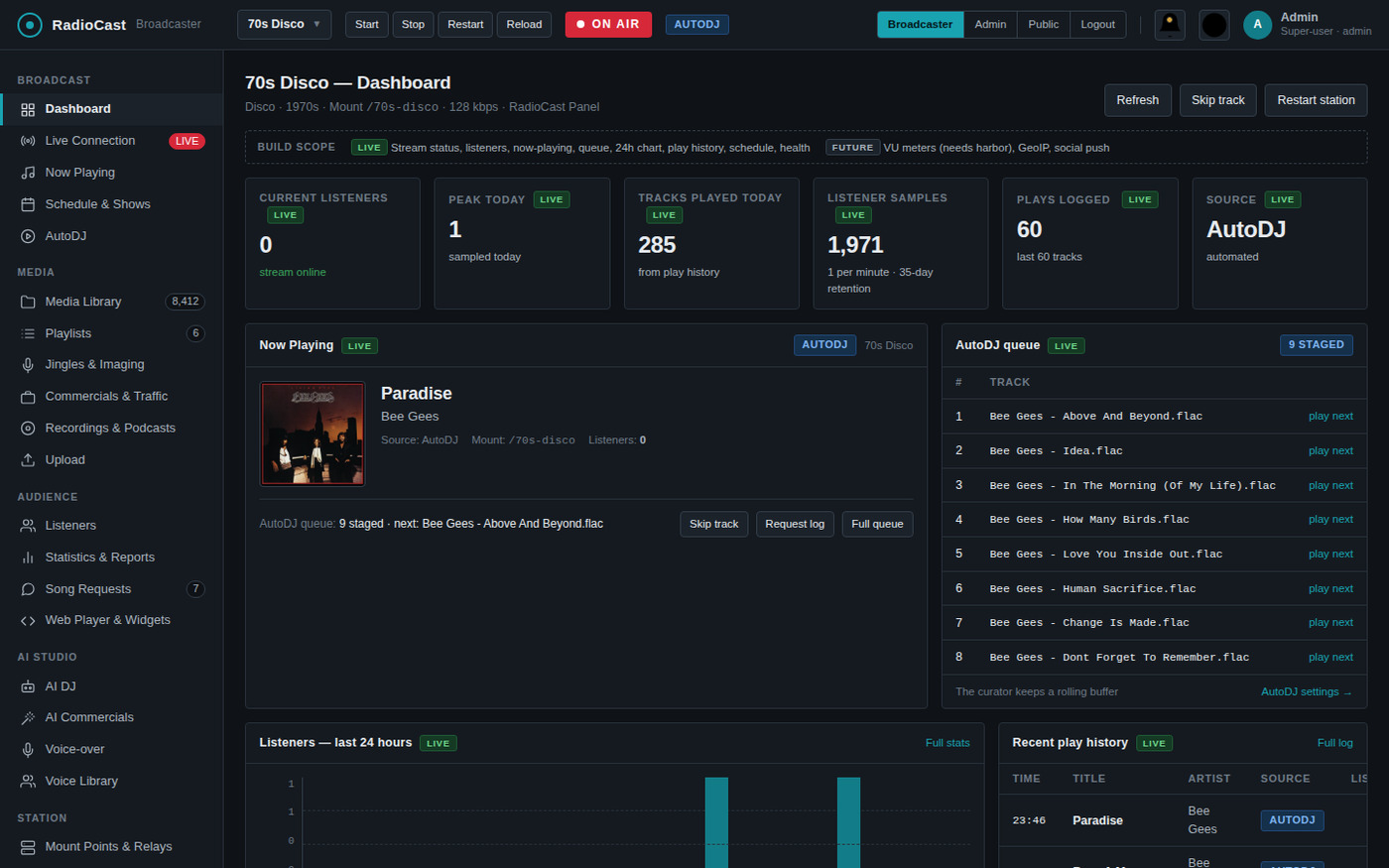
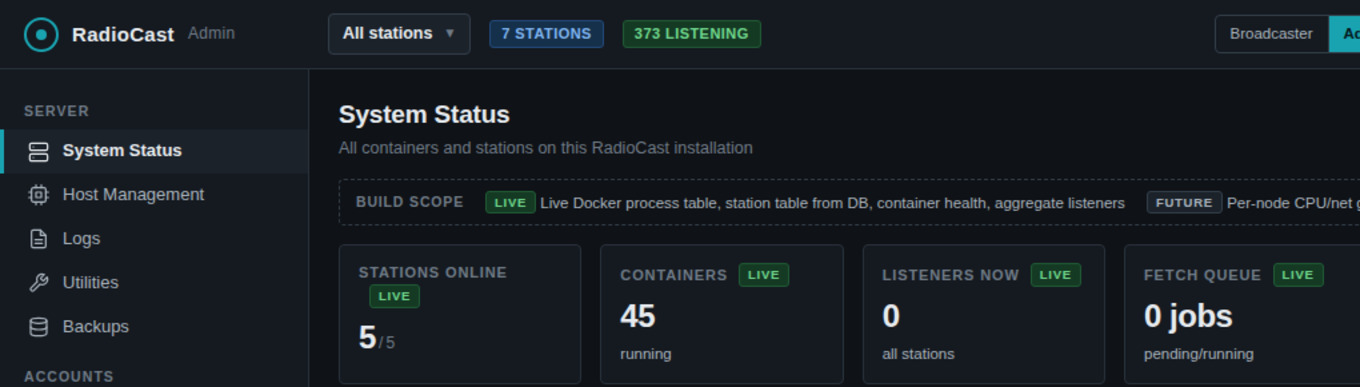
Today you pick a genre and a decade. Next you will hand it a list of exactly the artists and songs you want on air, and it will build the rotation around them.
The catalog is under one percent crawled and grows every hour. Early access holds your rate while it does.